

February 2026 members’ meeting minutes summary
Market Harborough Chamber of Trade & Commerce
1. Welcome & Introductions
-
The Chambers welcomed members and guests, confirmed the agenda, and thanked attendees for their time and contributions.
-
Purpose of meeting: The purpose of the meeting was to bring together stakeholders to address the growing flood risk in Market Harborough, raise awareness of its impact, and explore collaborative solutions. It also highlighted the importance of aligning skills development with local priorities, including sustainability and flood resilience, to support long-term community and economic growth.
2. Presentation: Flood Action – its YOUR business
Speakers: Bruce Durham, Chair, Harborough Flood Action Group
Slides: To educate local businesses on raising awareness, sharing initiatives and identifying opportunities to collaborate partnership working
Key Discussions
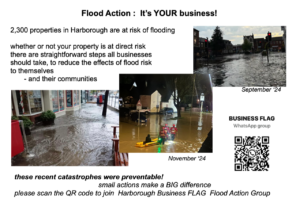
- The meeting highlighted the increasing flood risk in Market Harborough, with approximately 2,300 properties identified as vulnerable due to factors such as extreme weather, surface water runoff, and ongoing development impacting drainage systems.
- A strong emphasis was placed on the need for collective community action, recognising that flood prevention is not solely the responsibility of affected properties but requires engagement from residents, businesses, and organisations across the town. It was agreed that small, practical actions—such as reporting drainage issues, planting trees, and improving land permeability—can deliver significant cumulative impact when adopted widely.
- Ongoing work in natural flood management was showcased, including collaboration with organisations such as the Leicestershire & Rutland Wildlife Trust and local environmental groups. These initiatives aim to slow water flow, restore natural landscapes, and reduce pressure on existing drainage infrastructure.
- The group also discussed funding opportunities, including a £400,000 application to Anglian Water, which—if successful—would support both infrastructure improvements and environmental interventions.
- A key challenge identified was limited business engagement, with many organisations perceiving flooding as not directly affecting them. The meeting highlighted the need to shift this perception, reinforcing that flooding impacts the wider local economy and encouraging businesses to take proactive steps in building resilience.
- Finally, the importance of partnership working was reinforced, with collaboration between local councils, community groups, environmental organisations, businesses, and government agencies seen as essential to delivering long-term, sustainable flood solutions.
Summary of Recommendations – Next Steps
- To address flooding in Market Harborough, a coordinated, community-wide approach is needed. Key priorities include raising awareness that flooding affects the entire local economy, not just individual properties, and encouraging businesses and residents to take simple, practical actions.
- Focus should be placed on engaging businesses through clear commitments, supported by targeted communications and practical workshops to drive behaviour change. Strengthening partnerships between councils, environmental organisations, businesses, and community groups will be essential to ensure a joined-up response.
- Securing funding—such as the proposed £400,000 Anglian Water bid—alongside identifying quick, visible interventions in high-risk areas will help build momentum and demonstrate impact.
- Overall, the approach should combine awareness, action, and collaboration, embedding flood resilience into local business and community planning to create long-term, sustainable solutions.
3. Presentation: Developing the Local Skills Improvement Plan (LSIP) for LLR 2026–2029
Speakers: Harsh Shah, East Midlands Chamber; Derbyshire, Nottinghamshire and Leicestershire
Slides: To educate local businesses on raising awareness, sharing initiatives and identifying opportunities to collaborate partnership working
Key Discussions
- The discussion focused on the development of the Local Skills Improvement Plan (LSIP) for LLR 2026–2029, highlighting the need to better align education and training provision with the real needs of local businesses. It was recognised that many employers are experiencing skills gaps and recruitment challenges, and there is a need for stronger engagement to ensure their voices shape future provision.
- The LSIP was positioned as a key mechanism to bridge the gap between employers, colleges, and universities, using local labour market insights to inform decision-making. There was also an emphasis on preparing for future skills demands, particularly in areas such as digital, sustainability, and sector-specific technical skills.
- Overall, the discussion reinforced the importance of collaboration, improved employer engagement, and flexible training pathways to support workforce development and drive long-term economic growth in the region.
Key Takeaways
5. Update from Members & Networking Opportunities
- The meeting provided a valuable opportunity for members to connect, share updates, and explore potential collaborations. Attendees discussed their current activities, services, and areas of interest, helping to strengthen relationships across the local business community.
- There was a strong emphasis on the importance of networking as a driver for collaboration and growth, with members identifying opportunities to work together on initiatives such as flood resilience, community projects, and skills development.
- New connections were formed between businesses, local organisations, and stakeholders, with several attendees expressing interest in follow-up conversations, partnerships, and joint initiatives. The session reinforced the Chamber’s role as a hub for engagement, knowledge sharing, and supporting local business success.
- Members were encouraged to continue building relationships beyond the meeting and to actively participate in future Chamber events and initiatives.
- Click here to view the presentation slides from this months meeting.
6. Dates for the Diary
-
Chamber of Commerce Meeting; 25 March, 5pm onwards
-
MHBS, The Point, Market Harborough, Networking from 5pm | Meeting starts 5.30pm sharp
- This meeting will also be held online, if you are unable to make the meeting in person. Click here to attend the meeting online
- All guests are welcome.
- Join us for our monthly morning meeting, our monthly meetings are for both current members and new visitors looking to network and who are considering joining the Market Harborough Chamber of Trade and Commerce.
-
Get involved
- Build relationships with local businesses at our next meeting.
- Interested in presenting on your area of expertise or sharing member updates? We’d love to hear from you.

